AI-in-GTM implementation intelligence
Know which AI GTM workflows are real, what they need, and what to test next.
gtmpod tracks how AI is actually being used across SDR, AE, SE, CSM, AM, and RevOps teams. Read the news, briefs, founder insights, and workflow pages that separate implementable motion from vendor noise.
 Built by Jiabin Lu, GTM lead at Amplitude→
Start here
I'm picking tools
Independent reviews, pricing, and head-to-head compares.
Clay vs Apollo.io →Start here
I'm vetting vendor AI claims
Paste a pitch. Get workflow reality, risk badges, and a one-week test.
Try Claim Translator →Start here
I'm fixing a workflow
Briefs, use cases, and implementation notes — not vendor PR.
Read the guide →Weekly operator brief
One email: what changed in AI GTM, what to test next. No vendor fluff.
Tool map
High-intent tool reviews
Pricing, alternatives, and operator judgment — not vendor PR.
Clay
customb2b-data
Clay is the right pick when you are running 50–500 account ABM plays per month and want one canvas where RevOps composes data sources, signals, and AI research into a repeatable workflow. It is the wrong pick if you are doing 10K-volume blast outbound—Clay is a research surgeon, not a list-blaster. Credit math also flips against Clay above roughly 10K enrichments per month, where running [n8n](/tools/make-com) or Gumloop directly against [ZoomInfo](/tools/zoominfo) or [Cognism](/tools/cognism) APIs is cheaper. Most teams underestimate the RevOps skill required to keep a Clay workflow stable in production; treat it as a platform that needs a named owner, not a tool reps self-serve.
Apollo.io
customsales-engagement
Apollo's wedge is bundling prospecting + sequences + enrichment + dialer in one seat at SMB-friendly pricing. For 2–25 rep SDR teams at Series A–B that cannot afford [ZoomInfo](/tools/zoominfo) + [Outreach](/tools/outreach) separately, it is the obvious pick. The trade-offs are real and they compound at scale: data quality on senior and European contacts trails specialist databases, the sequencer lags Outreach and Salesloft on multi-channel orchestration, and the 'all-in-one' bundle means paying for surface you may not use. Above roughly 25 reps or once a real RevOps function exists, the math usually points back to specialist tools. Apollo AI is acceptable for ICP-tight motions but will not replace a real [Lavender](/tools/lavender) pass on the copy.
PostHog
customproduct-analytics
PostHog is the default analytics + replay + flags + LLM-obs stack for indie SaaS, AI-native startups, and PLG companies under ~1M MAU — one tool, one bill, fast to wire. We use PostHog on gtmpod itself. It loses against Amplitude when a Series C team needs governed taxonomy, multi-product experimentation programs, or CRM-grade audience syncs; the per-event price advantage flips around 10–20M MTUs once you stack replay and LLM observability on top. Disclosure: gtmpod has an affiliate link on PostHog; we still route enterprise readers to Amplitude or Mixpanel when they fit better.
Gong
customconversation-intelligence
Gong is the category-defining revenue-intelligence platform — the safe enterprise default for Series C+ orgs with 25+ AEs running a real coaching program. The 2024 SalesLoft adjacency and the rollout of Engage + Engage AI position Gong as a sequencer + CI bundle play, not a pure call-recording tool. That bundling cuts both ways: if you already pay for Outreach or Salesloft, Engage overlap is real cost, and adoption of three Gong surfaces (Calls, Deals, Engage) at once is rare in year one. Operator truth — Gong's ROI lives in coaching cadence and CRM hygiene, not in the AI summaries. Below 10 AEs or pre-Series B, [Chorus](/tools/chorus) or a lower-cost CI tool plus a disciplined [Outreach](/tools/outreach)/[Salesloft](/tools/salesloft) setup will usually beat the Gong bill.
HubSpot
customcrm
HubSpot is the right starting CRM for nearly any B2B SaaS up to ~100 employees and a credible system of record well beyond that for single-product or mid-market motions. Breeze AI in 2026 is a real Agentforce alternative for most teams—bundled into paid Hubs rather than metered per conversation, which makes ROI legible rather than aspirational. The trap is per-hub pricing creep: buy Sales + Marketing + Service Enterprise together and the ostensibly-cheaper-than-[Salesforce](/tools/salesforce) setup lands in the same six-figure neighborhood, with reporting depth still behind. Sit at the table where you actually need Salesforce-grade customization, not where the org chart says you should.
Amplitude
customproduct-analytics
Amplitude is worth the enterprise bill when you have dedicated analytics capacity, multi-product experimentation, and clean event governance—not when you want a cheap event firehose. Series A–B teams usually get more mileage from PostHog or Mixpanel until taxonomy and owner roles exist. Amplitude AI agents are implementable for ad-hoc analysis and MCP handoffs to Claude/Cursor, but they amplify bad data like any AI layer. Disclosure: gtmpod editor works at Amplitude; we still route early-stage readers to PostHog when the math fits.
Popular comparisons
Head-to-head tool picks
Clay vs Apollo.io
Clay is a RevOps-operated data workflow canvas for deep ABM research; Apollo is an SDR-ready bundle of database + sequencer + dialer. Different jobs, common confusion.
Compare →PostHog vs Amplitude
PostHog is the indie + early-stage default (analytics + replay + flags + LLM obs, one bill); Amplitude is the enterprise standard once you need governed taxonomy, experimentation, and AI agents on clean data. Crossover sits 1M–10M MTUs.
Compare →Apollo.io vs Outreach
Apollo is the all-in-one bundle (database + sequencer + dialer) for SMB-mid teams; Outreach is the enterprise sequencer with Kaia CI and Salesforce sync depth that 25+ rep orgs graduate to. The decision is scale and governance posture, not features.
Compare →Heap vs Mixpanel
Heap is autocapture-first—answer historical questions without prior instrumentation. Mixpanel is instrumentation-first with a generous free tier and Spark AI. Same category, different bets on taxonomy discipline.
Compare →Claim Translator badges
AI GTM hype has patterns. We give them names.
The funny part makes the risk memorable. The useful part is knowing what to test before messy data, hidden RevOps work, or CRM writeback lands on your team.
Risk badge
Demo Fog
Makes sense in the demo, gets weird in production.
See examples →Risk badge
Magic Pipeline
Pipeline promised, conversion math missing.
See examples →Risk badge
CRM Graffiti
The AI found a marker and a Salesforce wall.
See examples →Risk badge
Robot Costume
Autonomous AI, with a person in the suit.
See examples →Risk badge
Benchmark Smoothie
Impressive numbers blended beyond recognition.
See examples →Risk badge
Insight Shelfware
Beautiful insight. Nobody changes behavior.
See examples →Risk badge
Stack Jenga
Removes tools by leaning on undocumented workflows.
See examples →Risk badge
RevOps Tax
The automation arrives with setup homework.
See examples →By role
Read by GTM seat
Each role hub collects relevant tools, playbooks, handoffs, and workflow pages.
Most popular
Start with these AI GTM reads
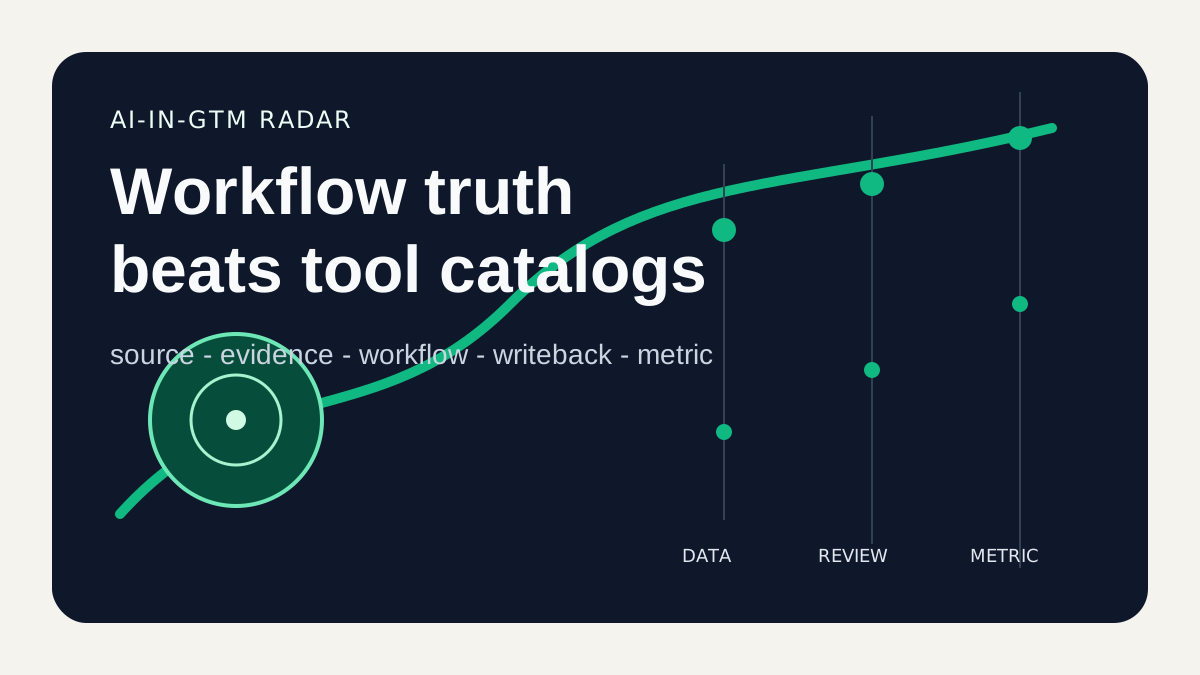
The first AI-in-GTM radar brief: directories are crowded, workflow truth is scarce
AI GTM content should not compete on catalog size alone. The valuable layer is implementation truth: which workflow a tool supports, what data it needs, who must review it, where it writes back, and how a team can measure whether it worked.
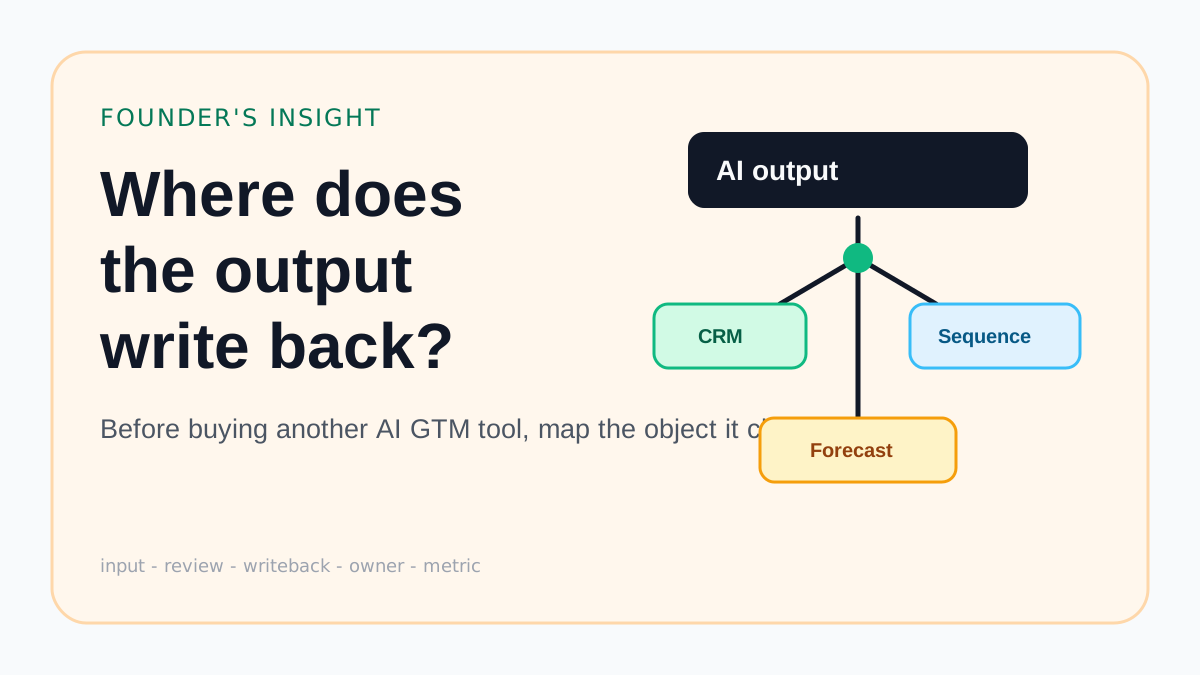
Stop Buying AI GTM Tools Until You Know Where The Output Writes Back
In AI GTM, the key question is not what the tool does. It is where the output goes, who trusts it, and what action it triggers.
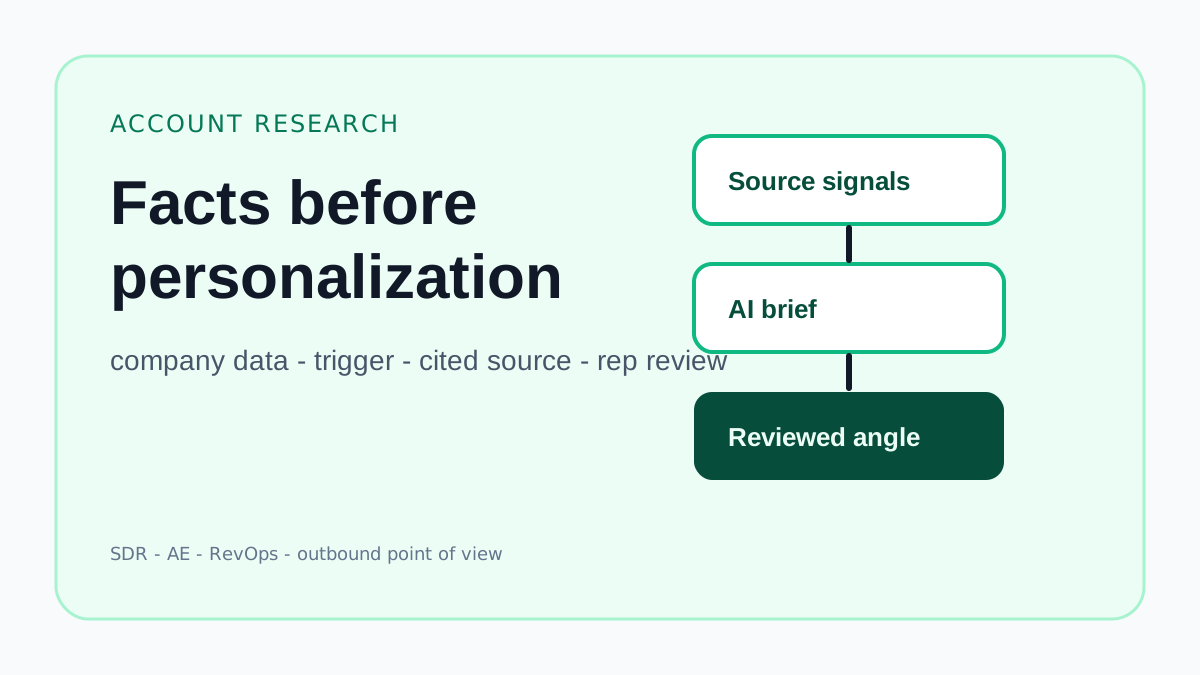
AI account research for outbound sales
AI account research helps SDRs and AEs turn company, role, trigger, and intent data into a sharper outbound point of view before the first touch. The workflow is useful only when it cites sources, separates facts from inference, and gives reps a review step before outreach.
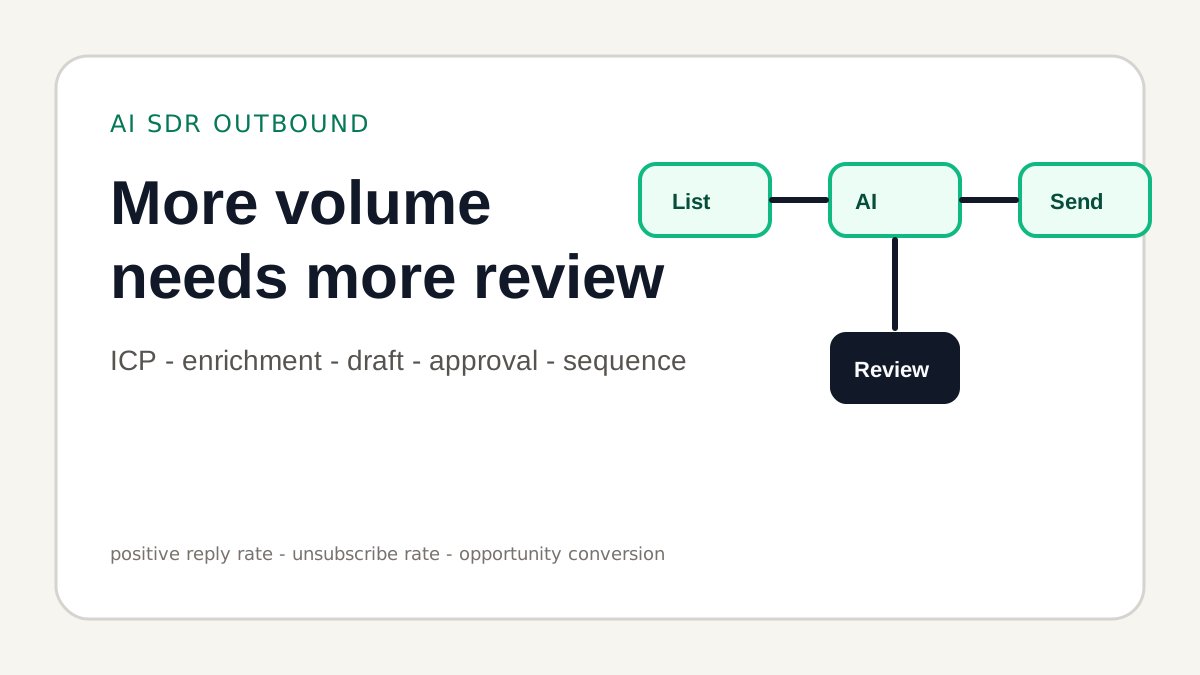
AI SDR outbound workflow
An AI SDR outbound workflow uses AI for account research, contact enrichment, prioritization, and first-draft messaging. It should not be treated as an autonomous replacement for SDR judgment; the highest-value design keeps humans responsible for ICP, offer, sequencing, and exceptions.
AI-assisted CRM enrichment
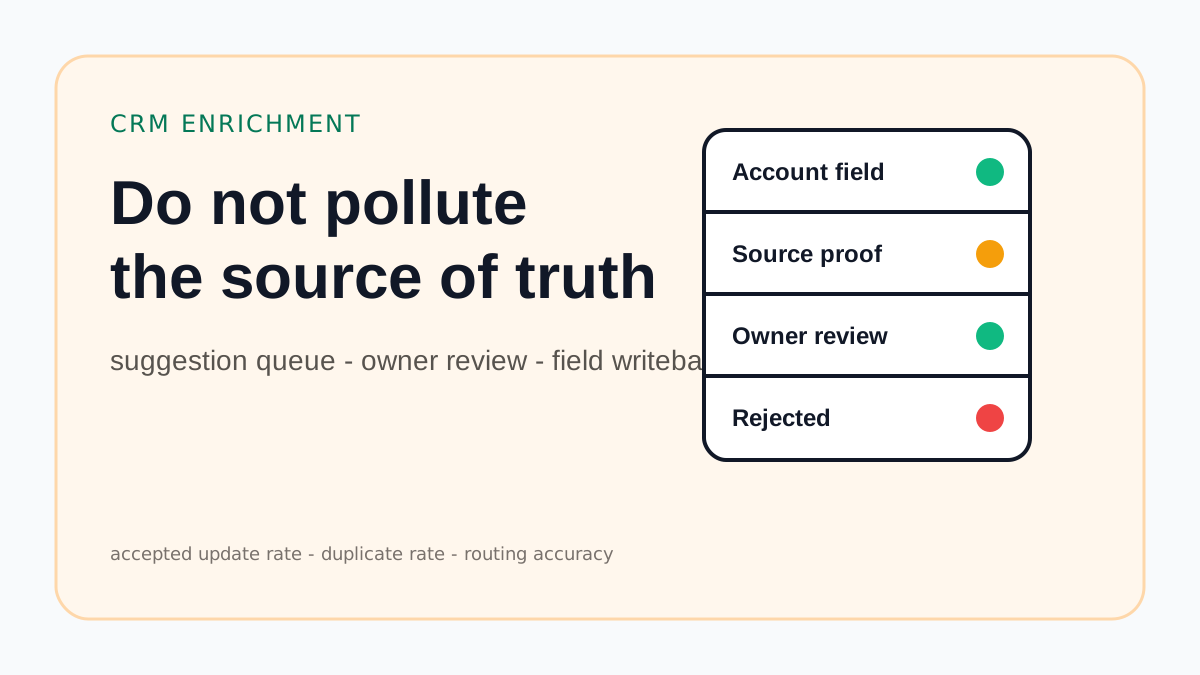
AI-assisted CRM enrichment helps RevOps and sales teams fill missing account, contact, and activity context without blindly polluting the CRM. The useful pattern is not full autonomy; it is a source-backed suggestion queue with owner review and clear writeback rules.
Recent posts
Latest from the implementation feed
AI account research for outbound sales
AI account research helps SDRs and AEs turn company, role, trigger, and intent data into a sharper outbound point of view before the first touch. The workflow is useful only when it cites sources, separates facts from inference, and gives reps a review step before outreach.
AI customer success risk detection
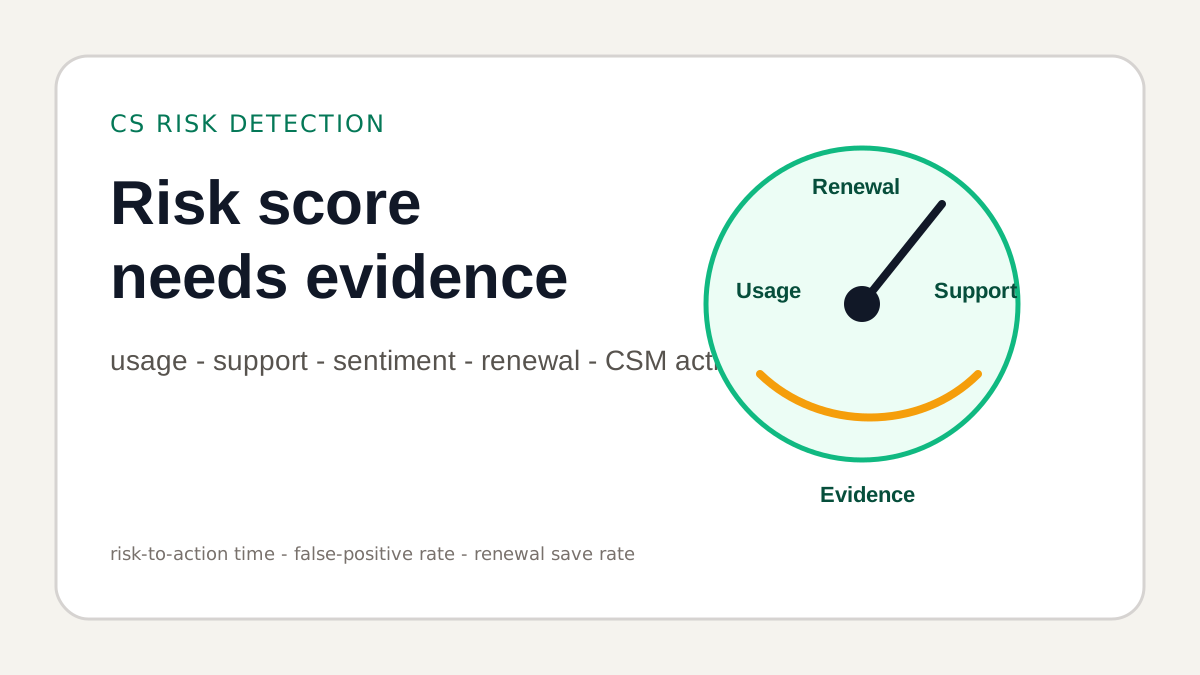
AI customer success risk detection combines product usage, support activity, sentiment, contract context, and CSM notes to surface accounts that may churn or need intervention. The workflow works best when AI explains the risk evidence and a human decides the next customer action.
AI sales directories are getting crowded; implementation filters matter more than listings
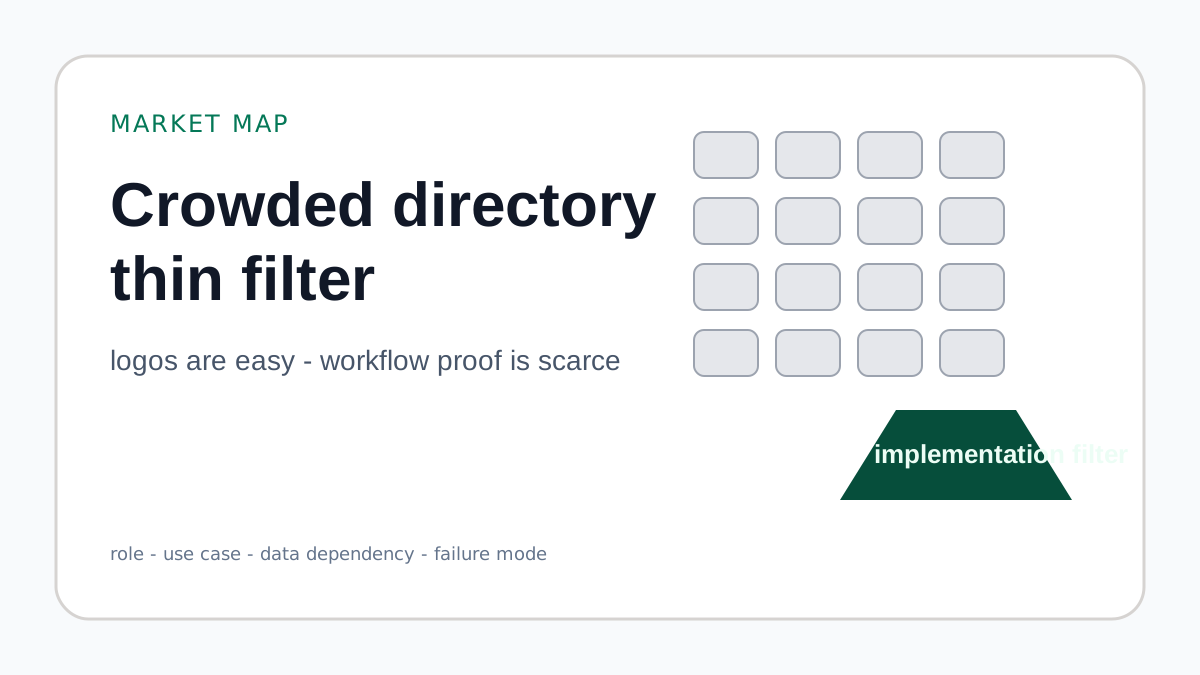
The useful wedge is not adding one more logo grid. GTM operators need a filter that says which workflow a tool supports, what data it needs, how hard it is to implement, and where it breaks in production. That is where an operator-engineer lens can beat a bigger catalog.
AI SDR outbound workflow
An AI SDR outbound workflow uses AI for account research, contact enrichment, prioritization, and first-draft messaging. It should not be treated as an autonomous replacement for SDR judgment; the highest-value design keeps humans responsible for ICP, offer, sequencing, and exceptions.
AI-assisted CRM enrichment
AI-assisted CRM enrichment helps RevOps and sales teams fill missing account, contact, and activity context without blindly polluting the CRM. The useful pattern is not full autonomy; it is a source-backed suggestion queue with owner review and clear writeback rules.
Apollo's affiliate program gives AI GTM content a concrete monetization anchor
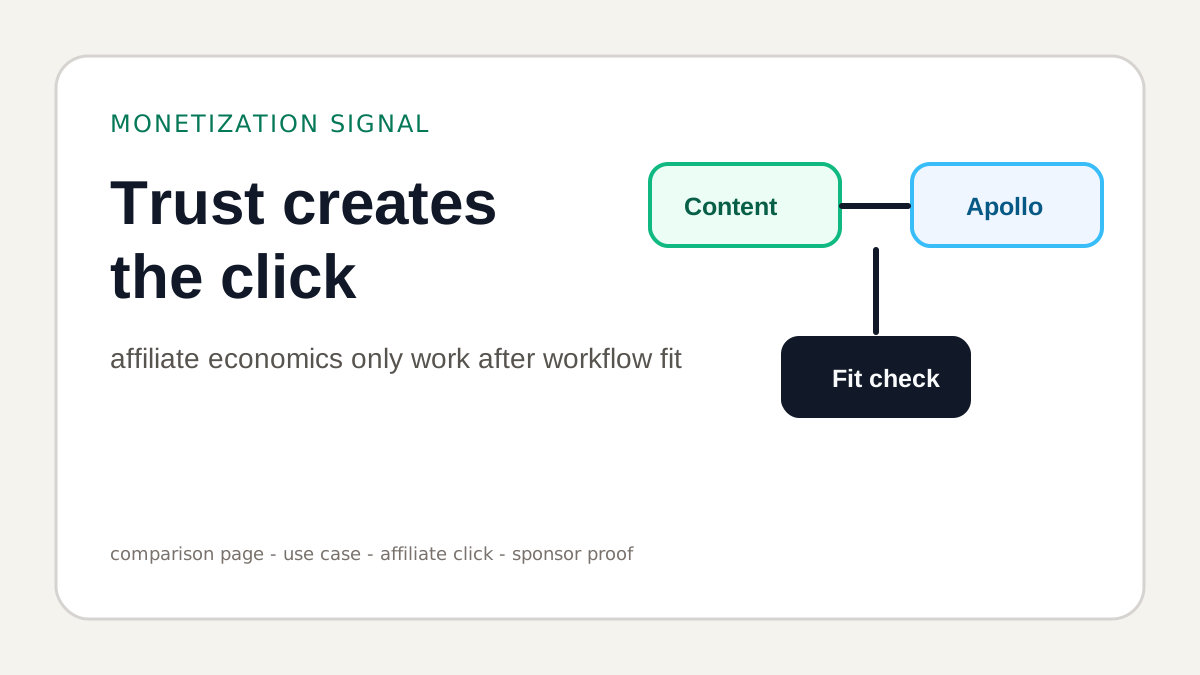
This matters because it validates the business path for comparison and use-case pages. The page should not push Apollo blindly; it should explain where Apollo fits, where Clay or ZoomInfo may be better, and what data hygiene a RevOps team needs before scaling outbound. Trust creates the click.
Stop Buying AI GTM Tools Until You Know Where The Output Writes Back
In AI GTM, the key question is not what the tool does. It is where the output goes, who trusts it, and what action it triggers.
The first AI-in-GTM radar brief: directories are crowded, workflow truth is scarce
AI GTM content should not compete on catalog size alone. The valuable layer is implementation truth: which workflow a tool supports, what data it needs, who must review it, where it writes back, and how a team can measure whether it worked.
By use case
Follow the workflow, not the hype
The main categories gtmpod watches for implementation truth.
RevOps AI readiness
CRM quality, routing logic, ownership, governance, and the data contracts agents depend on.
Explore →AI SDR reality
Research, enrichment, routing, triage, personalization, and human-reviewed outbound.
Explore →Product-led revenue signals
Usage signals, PQL/PQA motion, sales assist, customer expansion, and CS-to-AM handoff.
Explore →GTM engineer workflows
Clay, Apollo, Gong, PostHog, Zapier, Cursor, Claude, and the operating glue between them.
Explore →Weekly dispatch
Get the AI GTM operator brief.
One practical synthesis of the week's AI-in-GTM news: what changed, which workflow it affects, what can break, and what to test next.